Katie Agnes Smith
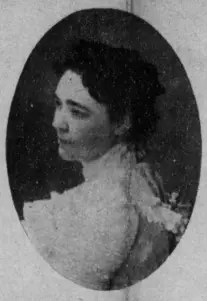
Ms. Katie A. Smith, the daughter of Gran W. Smith, was noted in newspapers as being the first lady embalmer in the south. In a time when embalming was done almost exclusively by men, Katie Smith worked tirelessly to develop a solid reputation and level of expertise that exceeded her male counterparts; that level of expertise managed to travel its way through many southern states. In a 1900 interview with the Kentucky Irish American (Louisville, Kentucky), Ms. Smith said that in order to practice undertaking one must not be educated in the classics and art but rather possess knowledge of human anatomy and physiology, the vascular system, visceral anatomy, and general and serous cavities. Ms. Smith accepted a range of deceased individuals but specialized in women and children cases.
Ms. Katie Agnes Smith broke barriers for women in Kentucky and the nation at large by foraging her way through a male-dominated industry. She took her work with the utmost of seriousness and continued her training whenever possible. Though she followed in her father’s footsteps as an undertaker, make no mistake; Ms. Smith was dedicated to her profession and to the people she served.
⁘ Works Cited ⁘
- The Kentucky Irish American, Louisville, Kentucky, 1 December 1900
Lorenzo D. Pearson
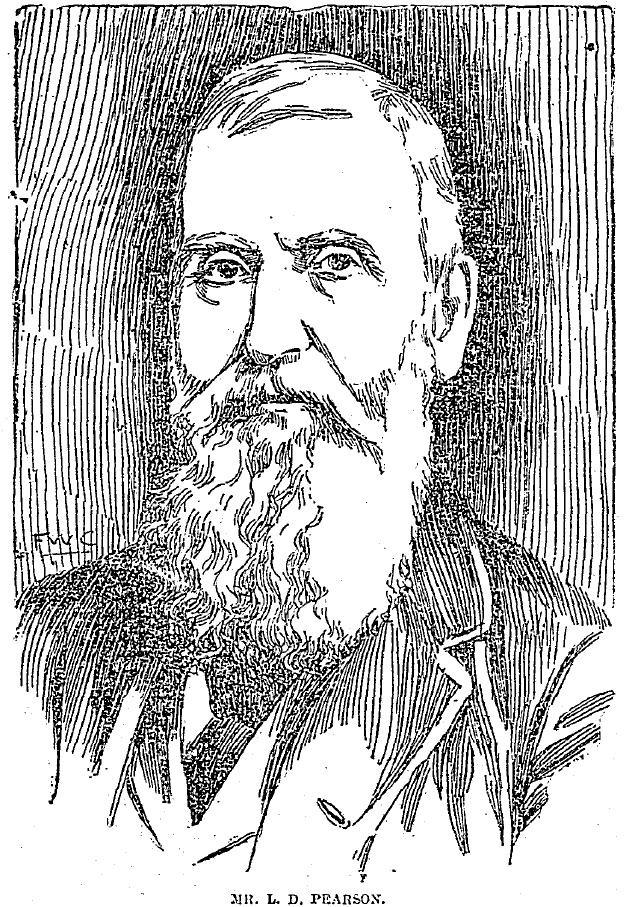
Lorenzo D. Pearson was born in Shelby County, Kentucky on January 27, 1810 to Peter and Susan Crow Pearson. He came to Louisville when he was twenty-one years old and worked as a cabinet marker for two years. Following that he worked with J. V. W. Smith, the leading undertaker in Louisville at the time. For the proceeding fifteen years, Mr. Pearson stayed with Smith until he decided to open an undertaking business of his own in 1848. He was married in 1842 to Mary A. Duhurst and had three sons, E. C., L. D., Jr., and George E.; he had three daughters, Emma, Kate, and Leila all of Louisville.
According to Mr. Pearson, “My business is very different from what it used to be. When I came to Louisville there was but one undertaker, whose name was James Reed. He was a cabinet maker; I became an apprentice to him. You see, then the business required us to take the measure of the corpse and to make the coffin. This required the skill of a cabinet maker, and the two went hand-in-hand.” He started in business on Main Street near Third Street, a short distance from the Galt House in 1848. His business, at the time, was styled Pearson & Hollingsead. He went into business with John Cordry until 1850 when he sold out to another undertaker, Mr. King. It was until 1864 that Pearson & King operated when he purchased his own quarters.
In an 1894 interview with the Courier-Journal, Mr. Pearson noted that there were many private burial grounds adjacent to residences of the citizens when he began to undertake; the burying place was the one formerly at the corner of Eleventh and Jefferson Streets, later called Baxter Square. There were also only two hearses in the city. Mr. Pearson noted, “they were simply palls on wheels, without any covering. There were four posts and all had a heavy drapery of black over them.” The next style that came in was inclosed [sic] by curtains. “I improved on this by having this inclosure [sic] of wood, with two oval windows on either side. This idea seemed to take the fancy of undertakers elsewhere, and my hearse became the model in general use for years. I had two of this style made, which attracted me much trade. One of these hearses is still in use here in Louisville, as I frequently see it with its oval windows passing through the streets. From these windows has come the modern glass inclosure [sic] that now obtains in the make-up of the hearse.”
Mr. Pearson believed that the [present] mode of having burials private was an economical innovation. “The number of hacks now ordered usually is from six to twelve, which would have been considered disrespectful to the memory of the departed some years ago, as all the friends of a person were expected to go to the funeral, and if no way were provided it mean an insult.” Pearson was the first to own his own conveyances; the graveyards were very accessible, and friends of the deceased could always join the procession with their private carriages thus making it unnecessary to hire or secure public conveyances.
“One of the greatest innovations and improvements in our business is embalming. The old process was very expensive. The corpse was put in a metal casket resembling a bathtub. This was then packed with ice. There were numerous fawcets [sic] that were opened at stated times to let the water escape. Now all this clumsy paraphernalia is done away with. Embalming has opened up a new line of business, which I think will eventually be done by women. A number of them are taking this up with much success. It will not be a great while before embalming will be a separate business. The embalmers will lay out the corpse, after which the undertaker will be sent for to furnish the caskets and articles incident to a funeral.”
At 11:30 o’clock on October 26, 1902, the oldest Undertaker in Louisville (at the time) died of the effect of advanced age, from which he had been a sufferer for the preceding few weeks.
⁘ Works Cited ⁘
- The Courier-Journal, Louisville, Kentucky, 2 September 1894
- The Courier-Journal, Louisville, Kentucky, 27 October 1902
Edward Clarence Pearson

Edward Clarence Pearson was born in Louisville to L. D. and Mary Pearson. He attended the public schools as a young man and became associated with his father in the undertaking business. Newspapers noted that E. C. was the first person to embalm a body in Kentucky and he was also the first to obtain an embalmer’s license in the state. He married Ella M. Smith, the daughter of Daniel D. Smith, and had two sons, Elmer C. and William E. Pearson. Additionally, he had two brothers, Geroge E. and L. D., Jr., who were both associated with him in business. He had three sisters, Emma, Kate, and Leila. E. C. and his father were pivotal in establishing licensing and promoting the education of undertakers and embalmers in Kentucky. E. C. was former president of the Falls City Funeral Directors’ Association, Kentucky Funeral Directors’ Association, and president of the Funeral Auto Company. Like his father, at his death, E. C. was the oldest undertaker in Louisville.
⁘ Works Cited ⁘
- The Courier-Journal, Louisville, Kentucky, 12 August 1917
Genoa and Fred Filbeck
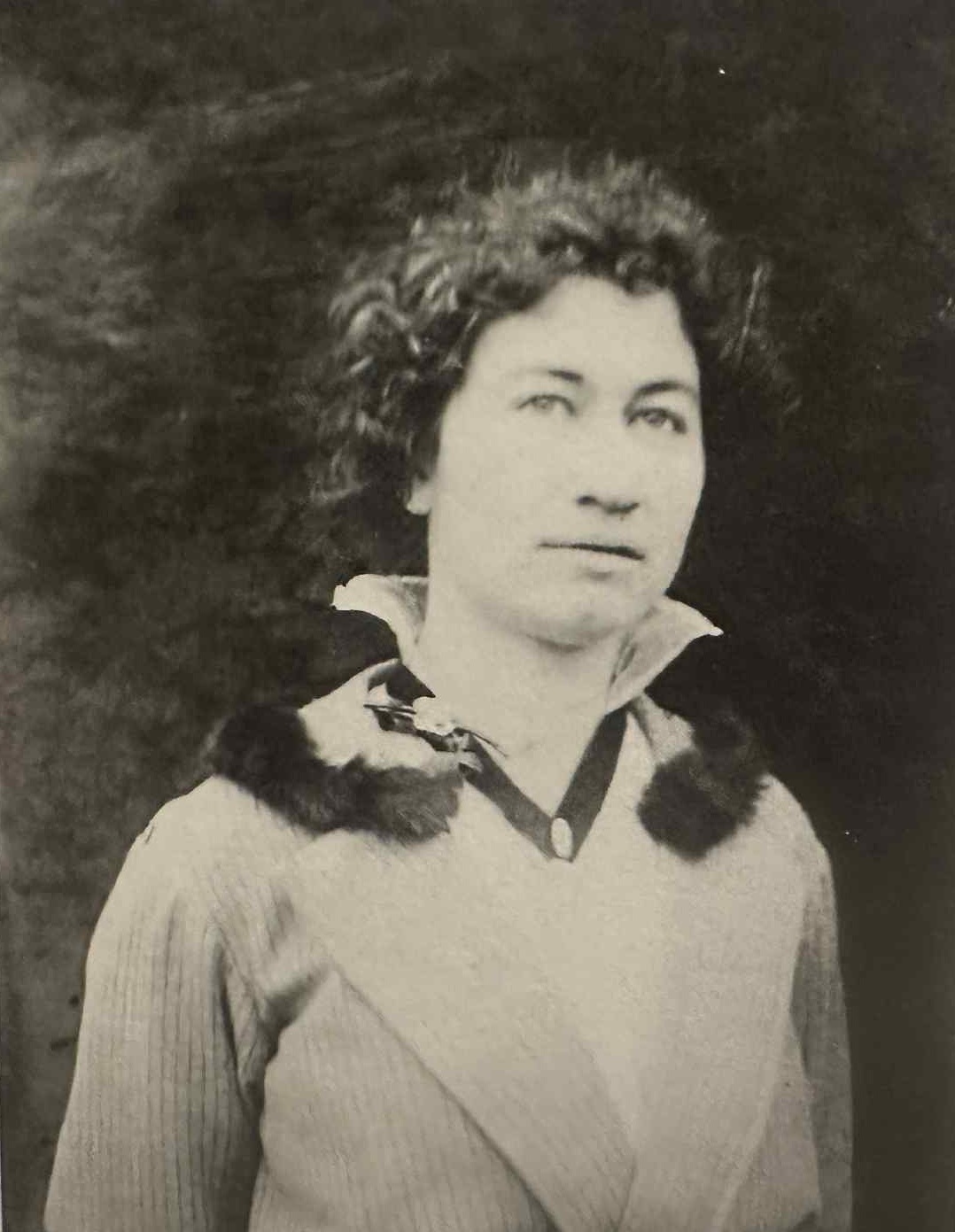

Genoa Culp was born around 1893 to Samuel and Susan Lindsey Culp. She married Fred Filbeck in 1920 and they moved to Gilbertsville where taught at the Pinnacle School. Just a few short years later, Genoa’s husband Fred clerked at J. D. Peterson and Company where he sold caskets. He would go on to buy into the casket division and eventually earned a degree and professional license where he opened his first funeral home with Genoa in October of 1925 in Marshall County. Genoa was among the first women in the Commonwealth to obtain a funeral director’s license. The funeral home was originally located on the other side of the court square in the Lovett Building but later moved to 12th and Poplar Streets in 1936 where it has remained since. Genoa was honored in Louisville at the State Funeral Directors Convention where she received a golden certificate for 50 years of service as a funeral director.
⁘ Works Cited ⁘
- Photos of Genoa and Fred are from Images of Marshall County by Connie M. Huddleston, Carol Aldridge, & Virginia Smith
- Marshall County, Kentucky Families, 1991 Turner Publishing
- The Tribune-Courier, Benton, Kentucky, 7 June 1978
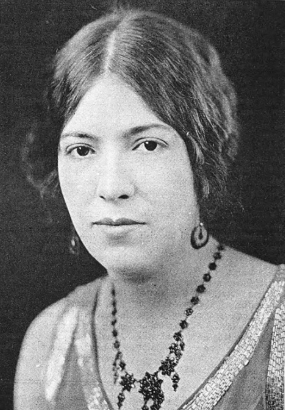
Miss Alice Leslie Miller, of Louisville, Kentucky, represents the third generation of her family in the funeral profession in Louisville, the establishment with which she is connected, that of John H. Miller, West Jefferson Street, having been founded by her grandfather, Christ Miller, in 1869, continued by her father, John H. Miller from 1890, when Christ Miller lost his life in the cyclone which devastated the city until 1926, when the son passed away, and since managed and conducted by her mother, Mrs. Mamie E. Miller. As a matter of accurate fact, Mrs. Miller has been in actual charge of the Miller Mortuary for several years before her husband’s demise, since he had been in poor health for some time, though he retained the office of president of the company. Miss Alice Miller, who is said to be the youngest woman ever to receive a license from the Kentucky Board, is a graduate of the Louisville Girls’ High School and was a student at Ward-Belmont College, Nashville, Tennessee, and at the Louisville Conservatory of Music, where she took both piano and voice for a number of years. She also spent a winter in New York where she studied designing at the Brown Salon, Fifth Avenue. She is inspired with the same spirit which animated her father, and has thrown herself wholeheartedly into her professional work. The first funeral she conducted was in the home of a generation which called on her father’s father to render similar service in 1869. During the influenza epidemic of 1917, when all funeral directors were working night and day, the John H. Miller Company had two men fall sick in that fatal epidemic. It was then that Miss Miller, a mere school girl, took charge of the hearse and delivered many bodies to the depot for her father. She also went into the homes and assisted dressing the ladies and children without any fear. Her services were publicly recognized and the Courier-Journal and Time, the leading paper of Louisville, took her picture on one of those emergency calls.
⁘ Works Cited ⁘
- The Casket and Sunnyside, 15 March 1927
Important note:
If you would like to use any information on this website (including text, bios, photos and any other information) we encourage you to contact us. We do not own all of the materials on this website/blog. Many of these materials are courtesy of other sources and the original copyright holders retain all applicable rights under the law. Please remember that information contained on this site, authored/owned by KHI, is provided under a Creative Commons Attribution-NonCommercial-NoDerivatives 4.0 International License.
Photographs, text, illustrations and all other media not authored by KHI belong to their respective authors/owners/copyright holders and are used here for educational purposes only under Title 17 U.S. Code § 107.

 Kentucky Historic Institutions